
How much toothpaste does a child need?
More toothpaste is not better. The ADA’s child oral-care guidance uses small amounts so families can include fluoride while limiting how much a young child swallows. A full strip across a small brush is more than the recommended amount for a preschooler.
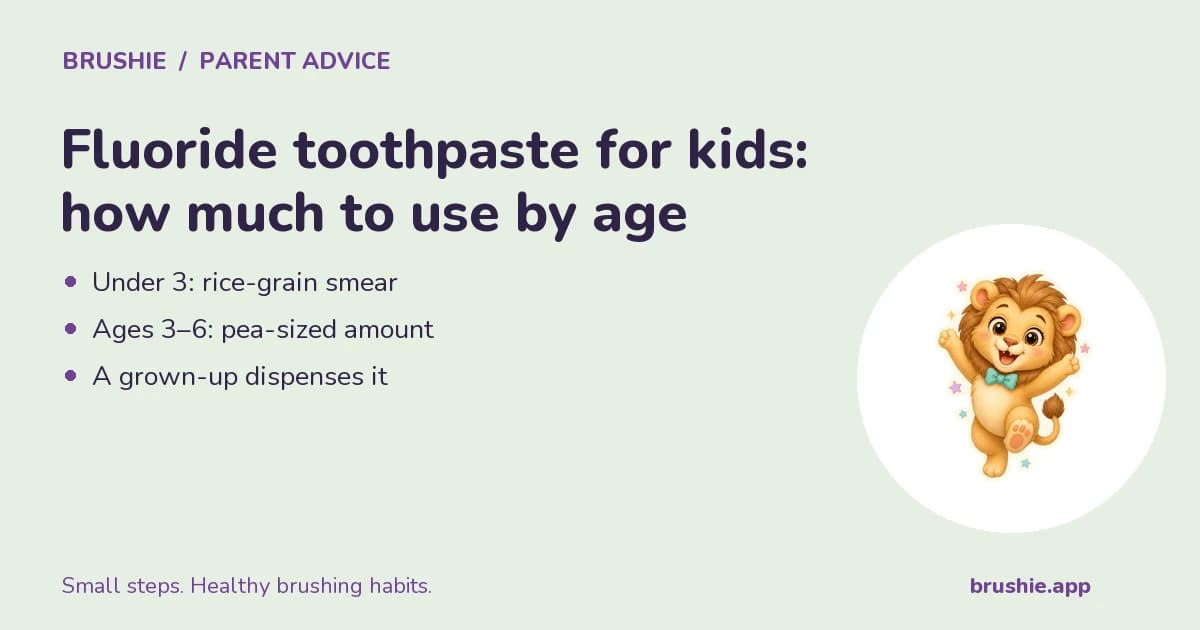
- Under age 3, including a 2-year-old: use no more than a rice-grain-sized smear of fluoride toothpaste.
- Ages 3–6: use a pea-sized amount of fluoride toothpaste and supervise so your child does not swallow it.
- Ages 7–9: follow the product’s age directions and your dentist’s advice, and continue to watch brushing and toothpaste use.
Source: American Dental Association: healthy habits for babies and kids.
Why choose toothpaste with fluoride?
The American Academy of Pediatric Dentistry recommends appropriate fluoride use as part of dental care to help manage the risk of tooth decay. Its guidance considers age, sources of fluoride, and individual risk. A colorful package or the word “kids” alone does not tell you what is inside a tube.
Check the active ingredient and age directions. For a U.S. family, an ADA-accepted fluoride toothpaste is one straightforward starting point. If a dentist has recommended a particular product, concentration, or amount for your child, use that individual advice rather than changing it based on a general article.
Source: American Academy of Pediatric Dentistry: fluoride therapy.
What if my child cannot spit yet?
Keep to the small age-appropriate amount and help with brushing. The AAP advises that an adult dispense toothpaste and keep it out of reach. When a child can spit, encourage them to spit out extra toothpaste without rinsing right afterward.
Do not turn spitting into another long task at the sink. Ask the dentist to demonstrate what to do for your child if it is difficult. Keep the tube with you during brushing and put it away afterward, rather than leaving a young child to add more paste while practicing.
Source: American Academy of Pediatrics: toothbrushing tips for young children.
If your child dislikes the flavor or foam
Describe the problem before shopping: is the taste too strong, does the foam feel uncomfortable, or does the child dislike the brush touching their tongue? Start with one change. Otherwise it is difficult to know which part made brushing more manageable.
Northumbria Healthcare’s sensory guidance discusses different flavors and less foaming toothpaste. Ask your dentist about a fluoride option that suits your child’s preferences. You do not need to switch to a fluoride-free toothpaste simply because an adult mint flavor is too intense.
Source: Northumbria Healthcare NHS: sensory strategies for toothbrushing.
Bring specific questions to the dentist
Take a photo of the tube’s label or bring it to your child’s appointment. Ask, “Is this the right product and amount for my child?” That gives the dentist something concrete to check and is more useful than comparing packaging claims.
This guide addresses everyday toothpaste use, not fluoride supplements, prescription-strength products, or treatment for a dental problem. Those decisions belong with your child’s dental or medical team. A brushing app can help you keep a routine; it does not decide your child’s fluoride needs.
General education from the Brushie team, drafted with AI assistance. This guide does not replace advice from your child’s dentist. How we prepare our guides.
Questions or a correction? Use the developer contact option on Brushie’s App Store page.